
JEN SHYU: THE SOUND OF BEANS
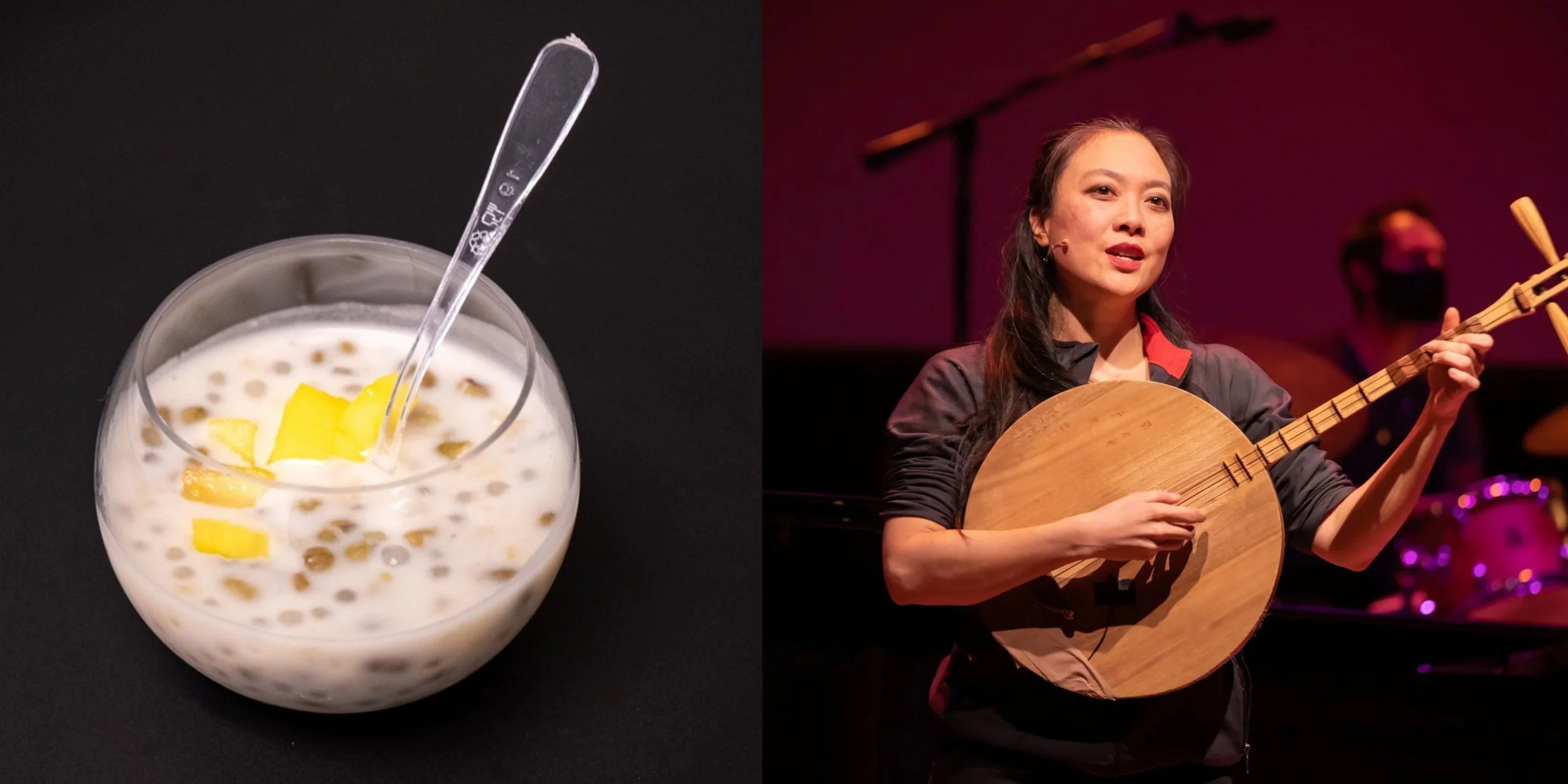
Sweet Mung Bean soup // Jen Shyu. Credit: Wolf Daniel
Recipe (serves 6 people)
1 cup whole dried mung beans
6 cups water
2 pandan leaves
⅓ cup small tapioca pearls
1 (13.5 oz) can coconut milk
⅓ cup coconut sugar
3 tbsp granulated sugar
¼ tsp salt
1 tsp vanilla paste
Optional Garnish
Diced ripe mango
Handmade tangyuan (small glutinous rice dumplings)
Recipe made in collaboration with Twist Catering NYC.
If you spend time with Jen Shyu, you notice her eyes. They seem to take everything in. A melody. A gesture. A memory. Another person's joy. Another person's grief. Nothing seems to pass through them untouched. Perhaps that is why her voice carries such extraordinary emotional depth. It can be playful, aching, fierce, tender, and impossibly intimate - sometimes all within a single phrase.
When I asked Jen about a family recipe and story, she did not begin with ingredients. She began with sound. The sound of her mother washing mung beans. The rinsing. The pouring. Water moving over small green beans before they disappeared into a pot on the stove. Then came another memory. The smell. A warm, comforting aroma that drifted through the family's modest home in Dunlap, Illinois. Before the soup was even ready, she already felt better.
Her mother made sweet mung bean soup - 綠豆湯 (Lǜdòu tāng) - throughout the summer. She always said that green beans cooled the body. For Jen, it was dessert. A bowl sweetened with rock sugar and, when there was time, handmade tangyuan - small glutinous rice dumplings that she adored as a child and simply called "dough balls."
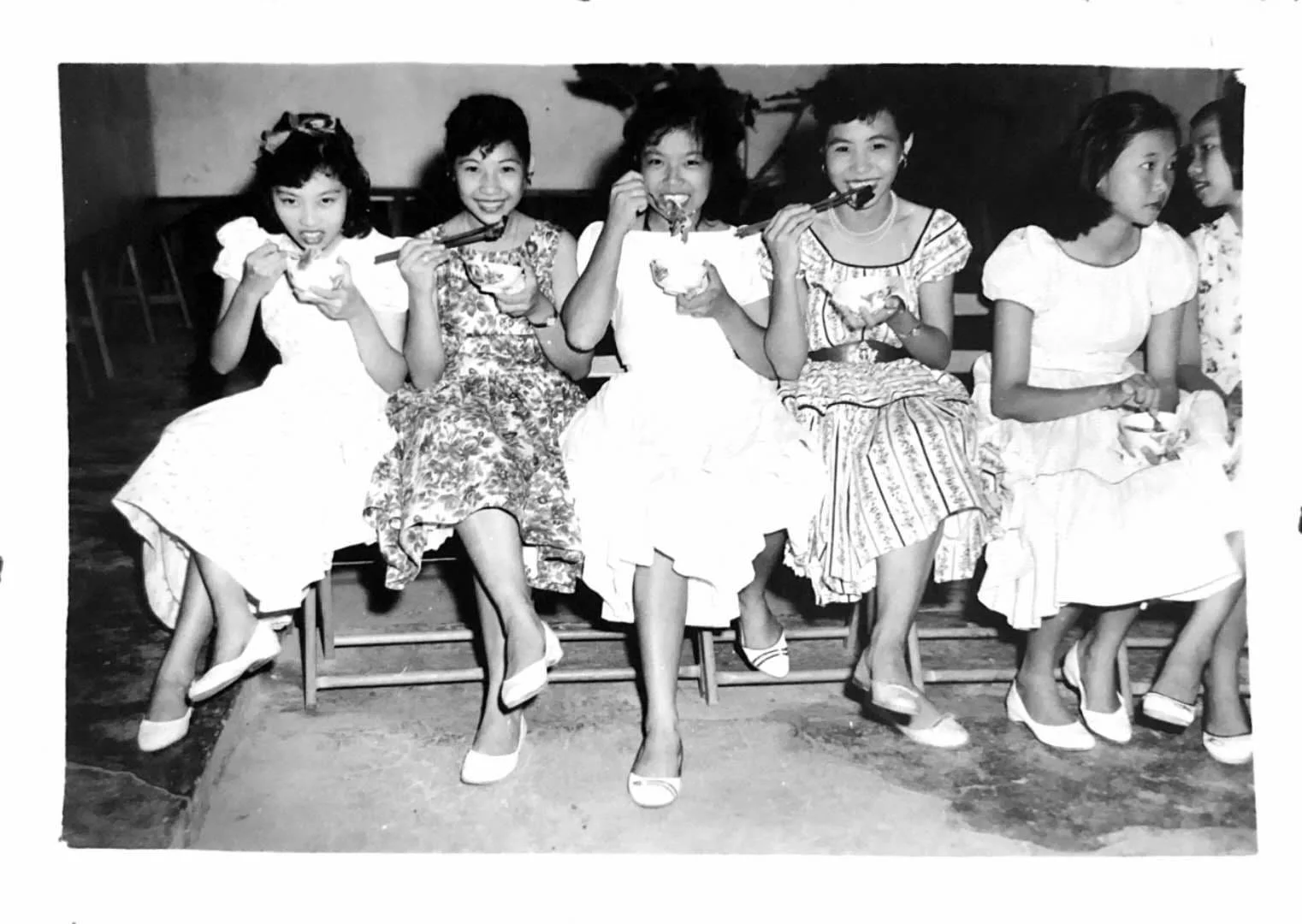
Jen’s mom, Tieng Vuong
As I prepared the recipes for Bloodlines, I found myself cooking many different kinds of beans. Cranberry and lima beans for Kweku's cachupa. Lentils for Sunny Jane's dal. Pigeon peas for Faye's pilaf. Yet none sounded quite like mung beans. When they tumble against a metal bowl or cray pot, they create a bright, delicate rhythm unlike any other bean. A sound somewhere between a maraca and a shaker. Primitive. Playful. Musical. Listening to them, I suddenly understood what Jen meant.
Before there was music, there was already music. Before Jen heard opera, jazz, Taiwanese folk songs, Timorese melodies, Javanese traditions, or the countless musical worlds she would later embrace, she heard mung beans. She heard water. She heard the sounds of a kitchen. She heard care.
Long before she became the artist we know today, she was a little girl sitting with her family in Illinois. Michael Jordan and the Bulls on television. Recorded ballet performances on VHS. Piano competitions. Baryshnikov dancing across the screen. Her father's beloved classical recordings. And always, somewhere in the background, the smell of her mother's cooking.
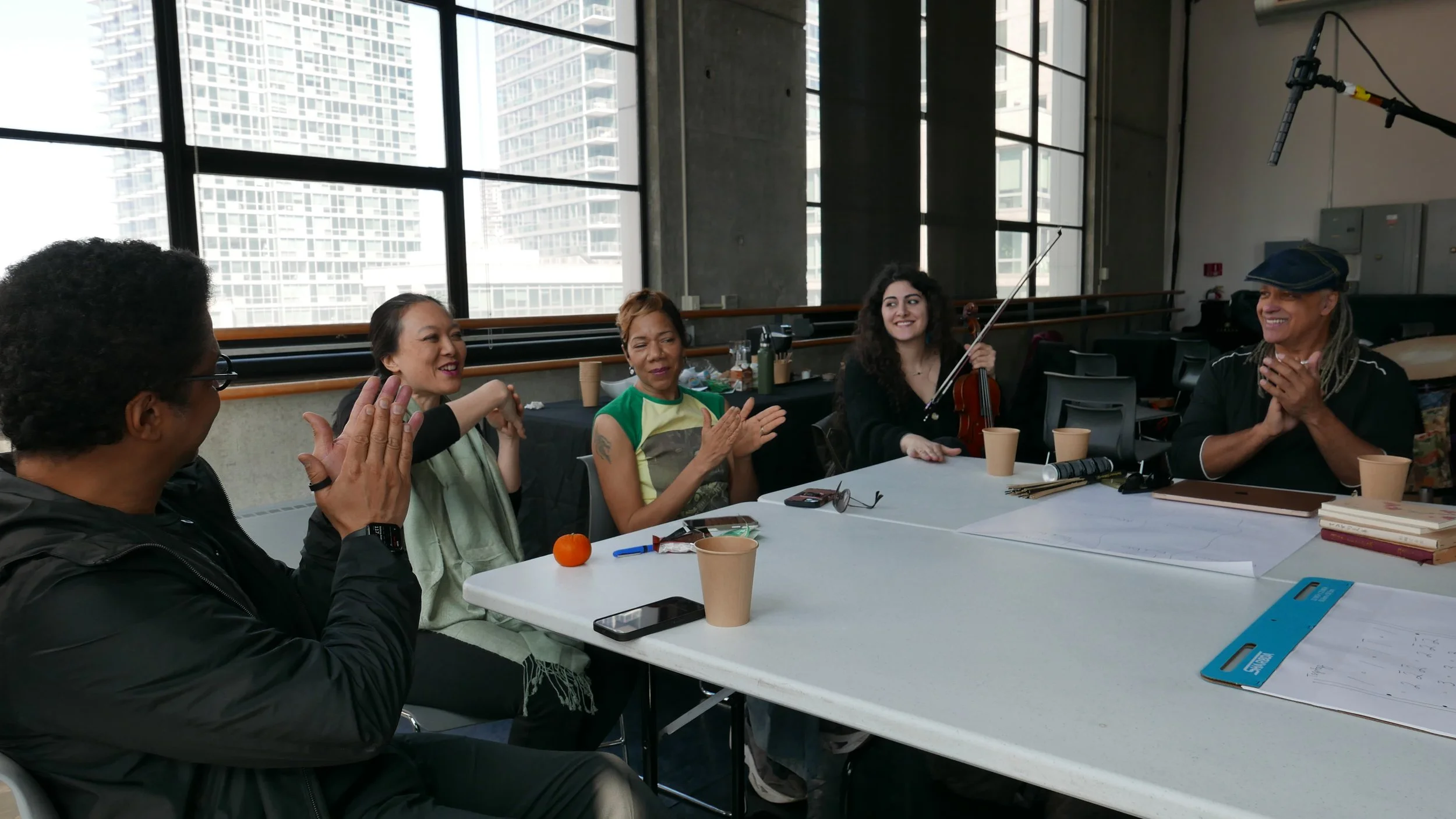
Jen sharing with 2024 Bloodlines Interwoven artists.
Today, both of Jen's parents are gone. Her mother passed away five years ago. Yet this soup remains. Not merely as a recipe, but as a vessel for memory. A bowl can still carry a house. A scent can still carry a voice. A simple spoonful can return us to a room we thought we had lost forever. Her mother believed that green bean soup cooled the body. Perhaps that is why Jen still returns to it. Some recipes cool us in summer. Others help us carry grief. This one somehow does both.
Mung beans have their own migration story.From China to Taiwan, from India to Southeast Asia, they have nourished people across cultures for centuries. In Chinese medicine they are valued for their cooling qualities; in Ayurveda they are prized for their ability to restore balance and support healing. Like Jen herself, they seem to belong to many places at once.
Having made this soup many times myself, I have come to love its quiet character. Mung beans carry a gentle roasted aroma and an earthy simplicity that feels both grounding and restorative.
Perhaps the simplest explanation is the best one: people feel better after eating it. Tonight, we share a bowl inspired by her mother's green bean soup. A reminder that some recipes nourish the body. Others nourish memory.
This one does both.
Itadakimasu.
— Yurie Ito
Cooking Instructions
Rinse the mung beans under cold running water for about 5 minutes.
Transfer the beans to a bowl, cover with plenty of water, and soak for 8–12 hours or overnight. Drain and rinse before cooking.
Place the soaked mung beans in a pot with 6 cups of water and the pandan leaves.
Bring to a boil over medium heat, then reduce to a gentle simmer. Cook for 40–50 minutes, or until the beans are tender and about two-thirds have begun to split open. Remove and discard the pandan leaves.
While the beans are cooking, prepare the tapioca pearls according to the package directions (typically simmer for 15 minutes, or until translucent). Drain and rinse thoroughly under cold water to remove excess starch. This step is important for achieving the proper texture.
Stir the coconut milk, coconut sugar, granulated sugar, salt, and vanilla paste into the cooked mung beans. Warm gently over low heat for about 5 minutes, stirring occasionally. Do not allow the soup to boil after adding the coconut milk.
Remove the pot from the heat and gently fold in the cooked tapioca pearls. Taste and adjust the sweetness or salt as desired.
Refrigerate overnight to allow the soup to thicken. If it becomes thicker than desired, stir in a splash of coconut milk or water until it reaches your preferred consistency.
Serve chilled or gently warmed, garnished with diced ripe mango if desired.
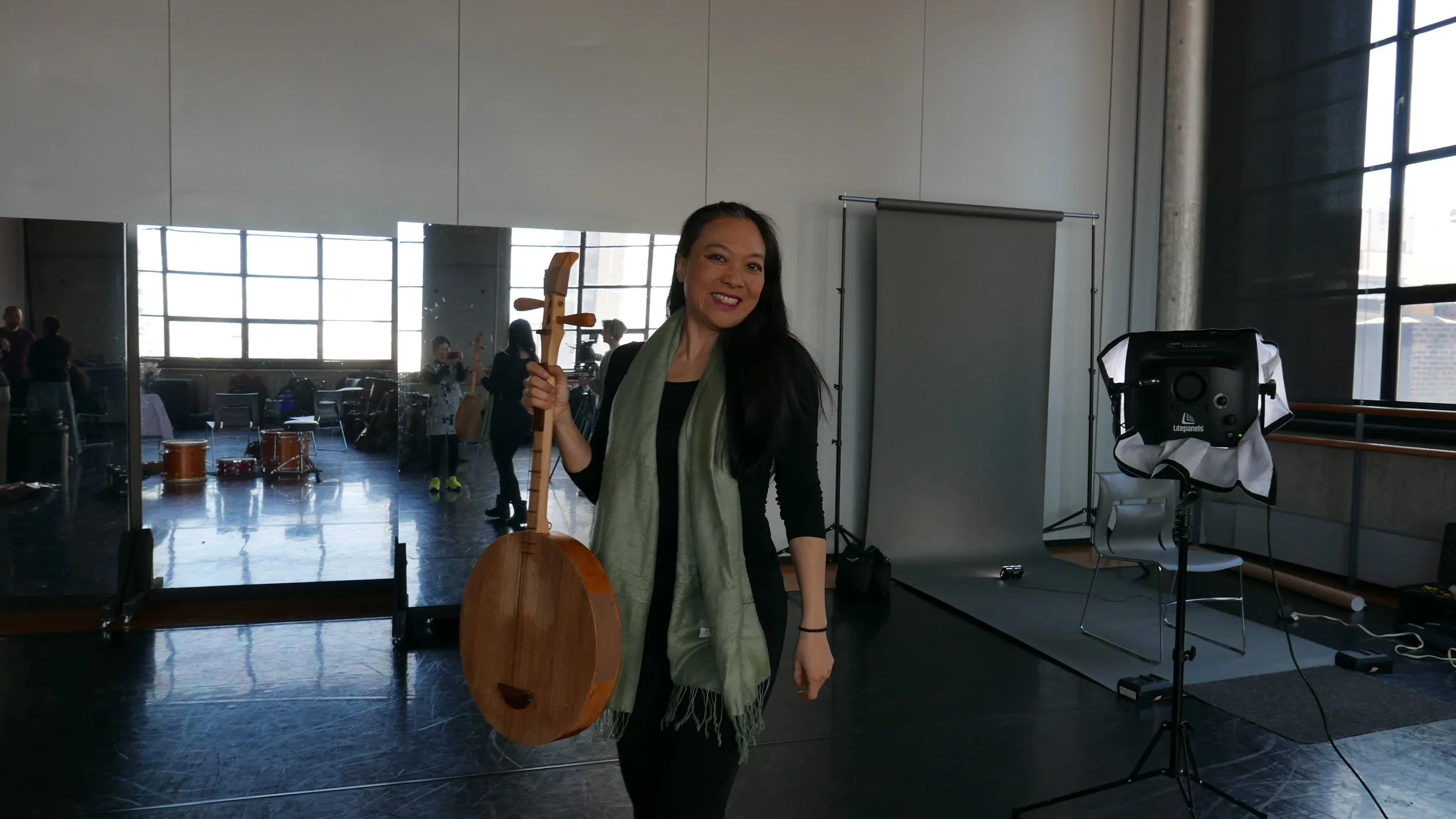
This is me taking a photo of my friend, Jen Shyu, during a Bloodlines gathering.
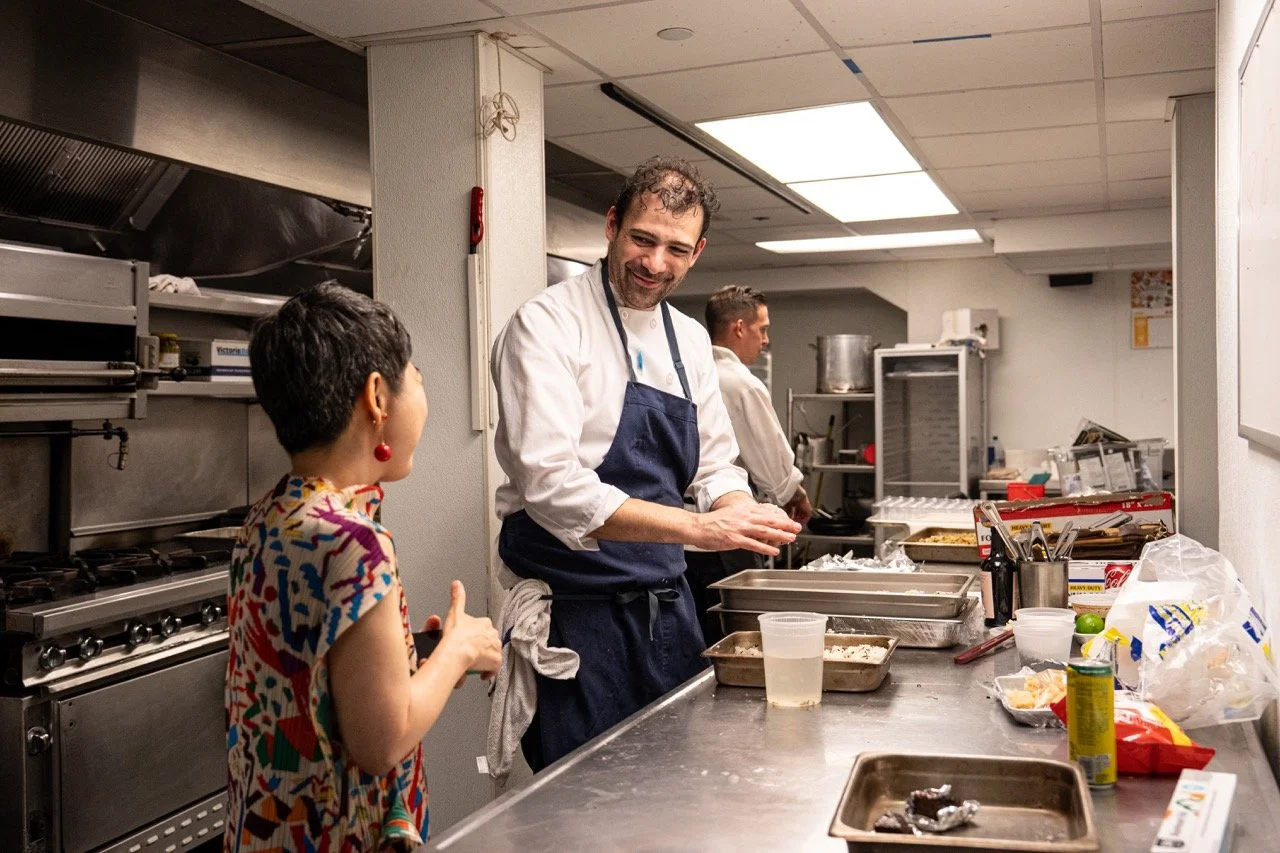
In the kitchen with Chefs Michael Balboni and Vincent Cortese, from Twist Catering NYC, who helped us design this recipe.
