
NASHEET WAITS’ HEALING QUALITIES OF BARBECUE BEEF RIBS
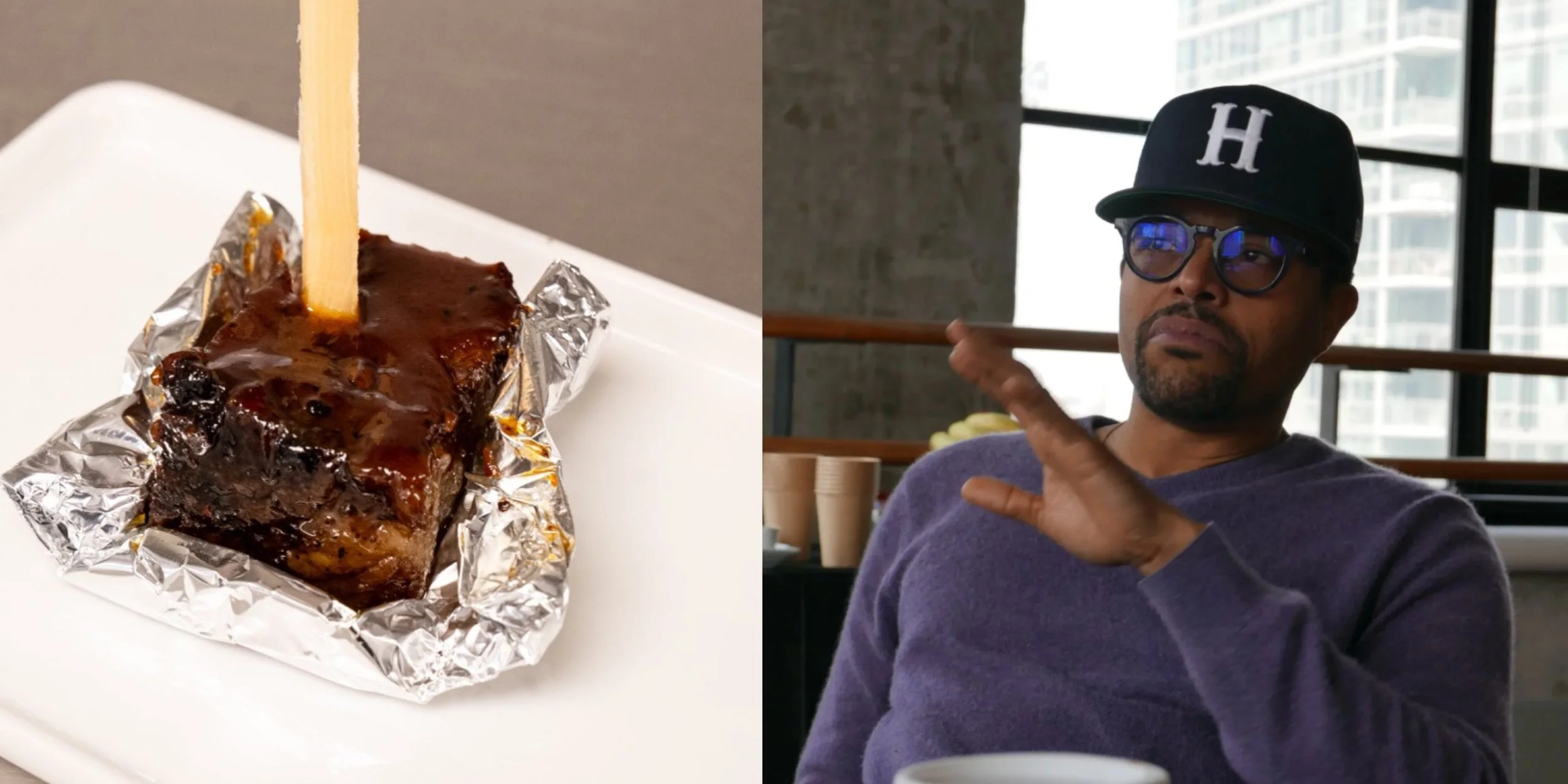
BBQ Ribs // Nasheet Waits
Recipe (serves 4-6 people)
For the Ribs
2 racks beef back ribs (approximately 6 lb)
2 tbsp mustard
Spice Mix
2 tbsp salt
2 tbsp black pepper
1 tbsp smoked paprika
1 tsp garlic powder
1 tsp onion powder
1 tsp ground coriander
½ tsp cayenne pepper
2 tbsp dark brown sugar
BBQ Glaze
1 cup ketchup
¼ cup apple cider vinegar
3 tbsp molasses
2 tbsp mustard
2 tbsp Worcestershire sauce
2 tbsp dark brown sugar
1 tbsp Crystal Hot Sauce (or your favorite hot sauce)
1 tsp smoked paprika
½ tsp black pepper
½ tsp garlic powder
2 tbsp butter
Recipe made in collaboration with Twist Catering NYC.
The first thing people notice about Nasheet Waits may be his laugh. For someone so impossibly cool, he laughs with the delight of someone who seems genuinely amused by the world. Conversations drift. A low, unmistakable chuckle that suggests he is already enjoying the joke, whether the rest of us have caught up yet or not. Stay around him a little longer, however, and another quality emerges.
He seems not especially sentimental, nor does he make a performance out of caring. Yet he has a habit of quietly stepping swiftly in when someone needs help. No announcement. No credit. Just swift action. He checks in on younger musicians. He makes space for others. He notices when something needs doing and simply does it. I've often wondered where that comes from. Perhaps the answer begins long before New York jazz clubs and concert halls, in Walnut Grove, Mississippi.
Nasheet's grandmother, Lillie Bell Weathers, was born there in 1917. The eldest daughter in a large family, she spent much of her life caring for others. As a young woman, she left Mississippi, first for Connecticut and later for Detroit, part of the Great Migration that carried generations of Black families northward in search of safety, opportunity, and a future.
But migration never meant leaving family behind. Those who could work sent money home. Those who found stability helped those who had not. Care was not an act of charity. It was responsibility. That was the world Lily Bell came from. And she fed people.
When Nasheet's father, drummer Freddie Waits, returned home from the road, there was one dish he always requested: chicken and dumplings. She made it for young Nasheet and his brother as well. They appreciated it, but it never quite became their favorite. Lillie Bell noticed. So she made something else.Barbecue beef ribs. Those ribs became the dish. The recipe is mostly lost now. There was barbecue sauce. The ribs were on the bones and oven-baked, not grilled. There were probably greens, cabbage, and cornbread on the table. The details have faded. What remains is the feeling. And the stories.
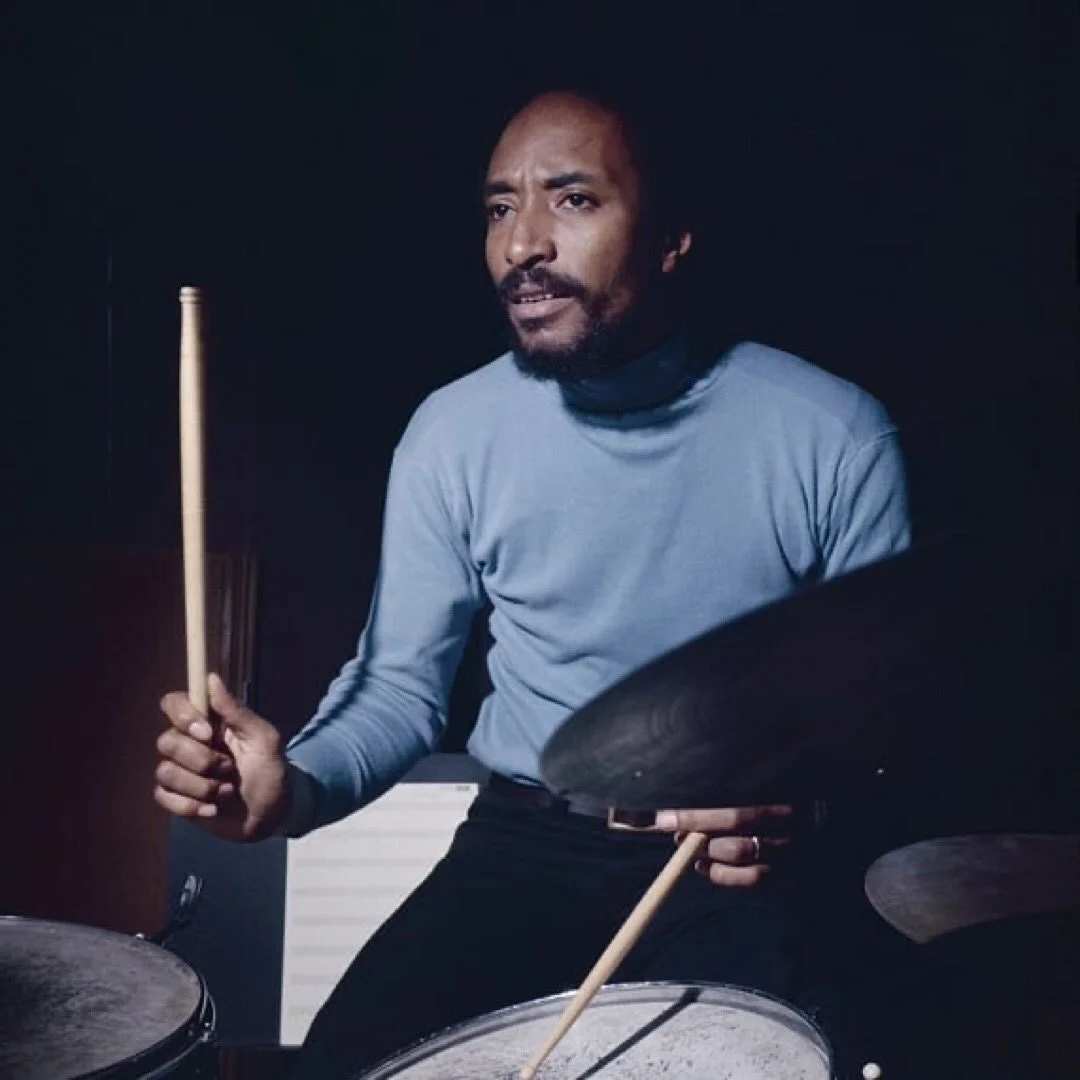
Nasheet’s father, drummer Freddie Waits.
One evening after a performance at the Detroit Institute of Arts, saxophonist Abraham Burton wasn't feeling well and returned early to the hotel. Nasheet and drummer Eric McPherson went to Lily Bell's house for a late dinner. There were ribs on the table. Before they left, a plate was wrapped in foil and sent back for Abraham. At the hotel, he was sick and had no fork and no knife. So he peeled back the foil and ate with his hands. One bite. Then another. By the time he finished the plate, he felt a little better. The next morning, he woke up feeling completely restored. Nasheet laughs when he tells the story, "my grandmother's barbecue beef ribs had healing qualities." Then he offers another explanation, "she was blessing us with that love elixir all throughout the beef ribs."
As a child, Nasheet received his first drum set from that same grandmother. He would place it on top of the kitchen table in the family's New York apartment, pretending the table was a stage. Playing along with Stevie Wonder and Lee Morgan records, he performed for an imaginary audience until the drums eventually fell off the table. I often imagine that kitchen. The sounds of cooking. The smell of food. Family moving through the room. And a little Nasheet making rhythm in the middle of it all. His music did not begin in a studio. It began on a kitchen table. In a place where people gathered.
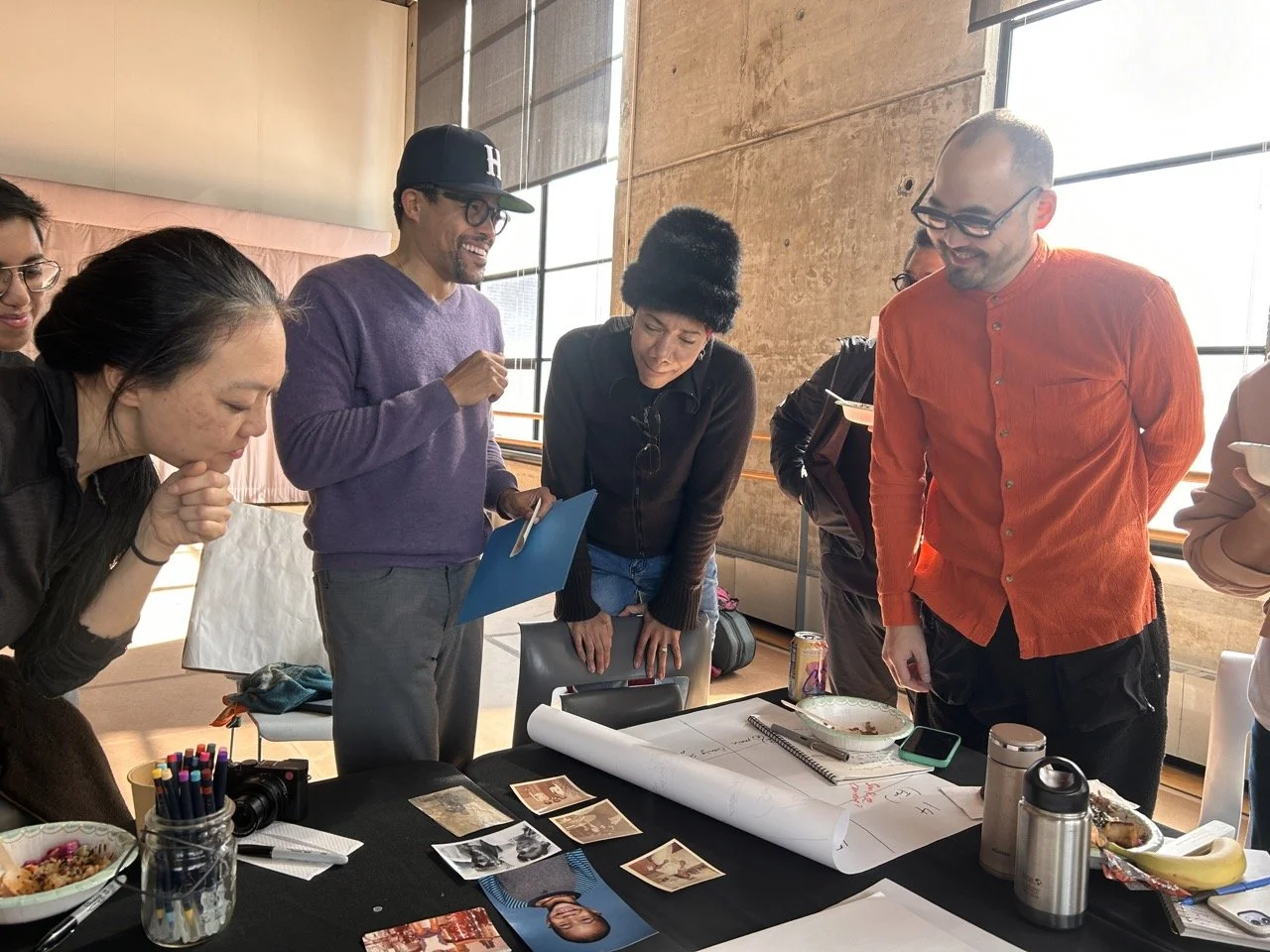
Kaoru Watanabe and the 2024 Bloodlines Interwoven artists gathered to hear Nasheet’s stories.
And perhaps that is why people gather around him now. The remarkable musicians who surround him. The younger artists he encourages. The community he continues to build. In 2024, I sat beside Nasheet's son, August, during a performance of Bloodlines. He was still a child, perhaps eight or nine years old. The way he responded to the groove. The way he anticipated musical conversations. The way he instinctively entered into the call and response of the music. And I remember thinking: this is what a lineage looks like. Not genetics. Not technique. But ways of listening. Ways of caring. Ways of belonging.
Lillie Bell's recipe may be gone. But her love elixir remains. It travels from a Mississippi kitchen to a Detroit dinner table, from Freddie Waits to Nasheet, and now to August. Tonight, her ribs return to the table. Not as a recreation of a recipe, but as a celebration of a lineage.
Itadakimasu!
- Yurie Ito
Cooking Instructions
Preheat the oven to 275°F (135°C).
Brush the ribs evenly with the mustard. Combine all of the spice mix ingredients and season the ribs generously on all sides.
Place the ribs on a wire rack set over a sheet pan. Pour 1 cup of water into the bottom of the pan and cover tightly with aluminum foil.
Bake for 3½–4 hours, or until the ribs are tender and reach an internal temperature of 200–205°F (93–96°C).
While the ribs cook, prepare the glaze by combining the ketchup, apple cider vinegar, molasses, mustard, Worcestershire sauce, brown sugar, hot sauce, smoked paprika, black pepper, garlic powder, and butter in a saucepan. Cook over medium heat until the butter melts and the glaze is smooth.
Increase the oven temperature to 450°F (230°C).
Brush the ribs generously with the glaze and return them to the oven for 3 minutes, or until the glaze begins to set. Remove the ribs, brush with another layer of glaze, and return to the oven for another 3 minutes. Repeat this process two more times, for a total of four layers of glaze. Watch carefully during this stage, as the sugars in the glaze can burn quickly.
Let the ribs rest for at least 15 minutes before slicing and serving.
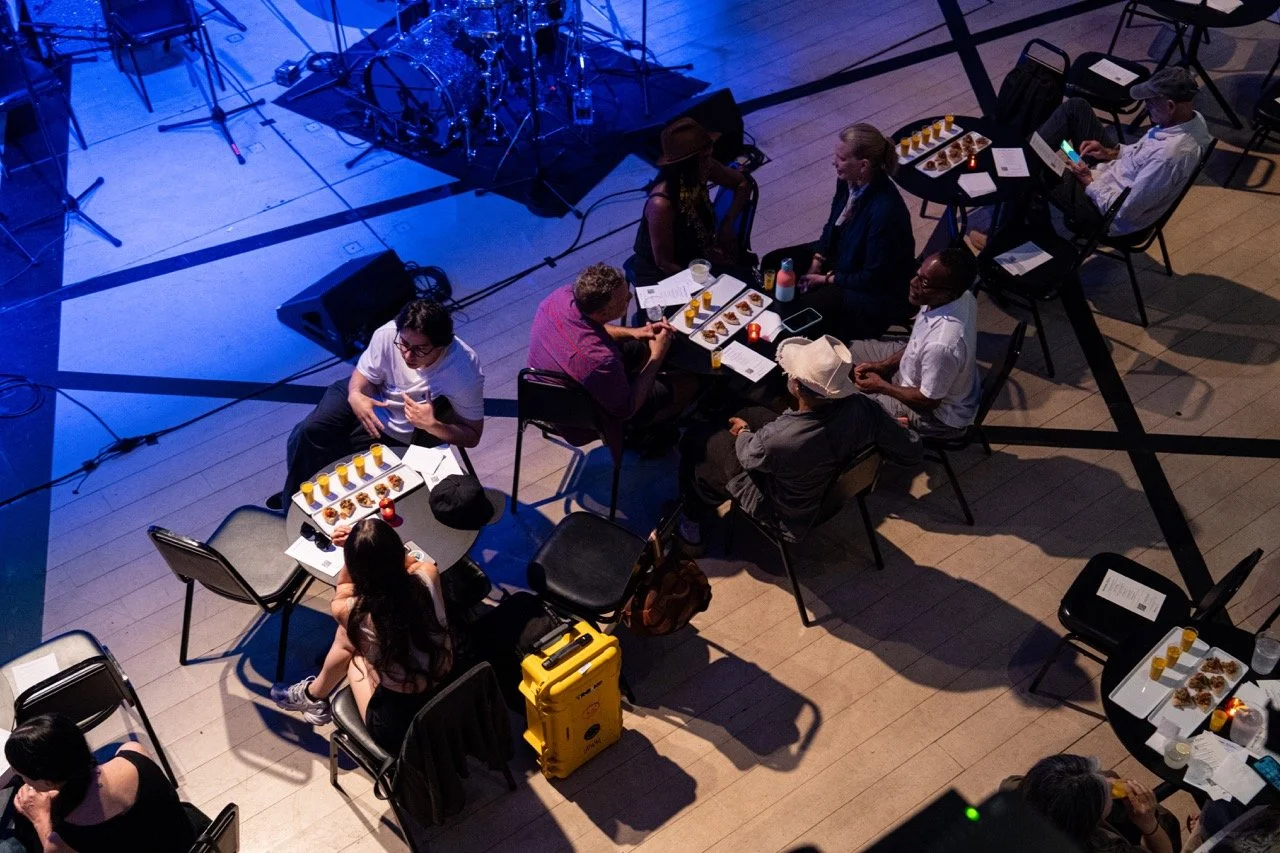
The audience enjoying the delicious Bloodlines Kitchen food, prepared by Twist Catering NYC.
