
SUNNY’S JAIN-STYLE DAL BATI
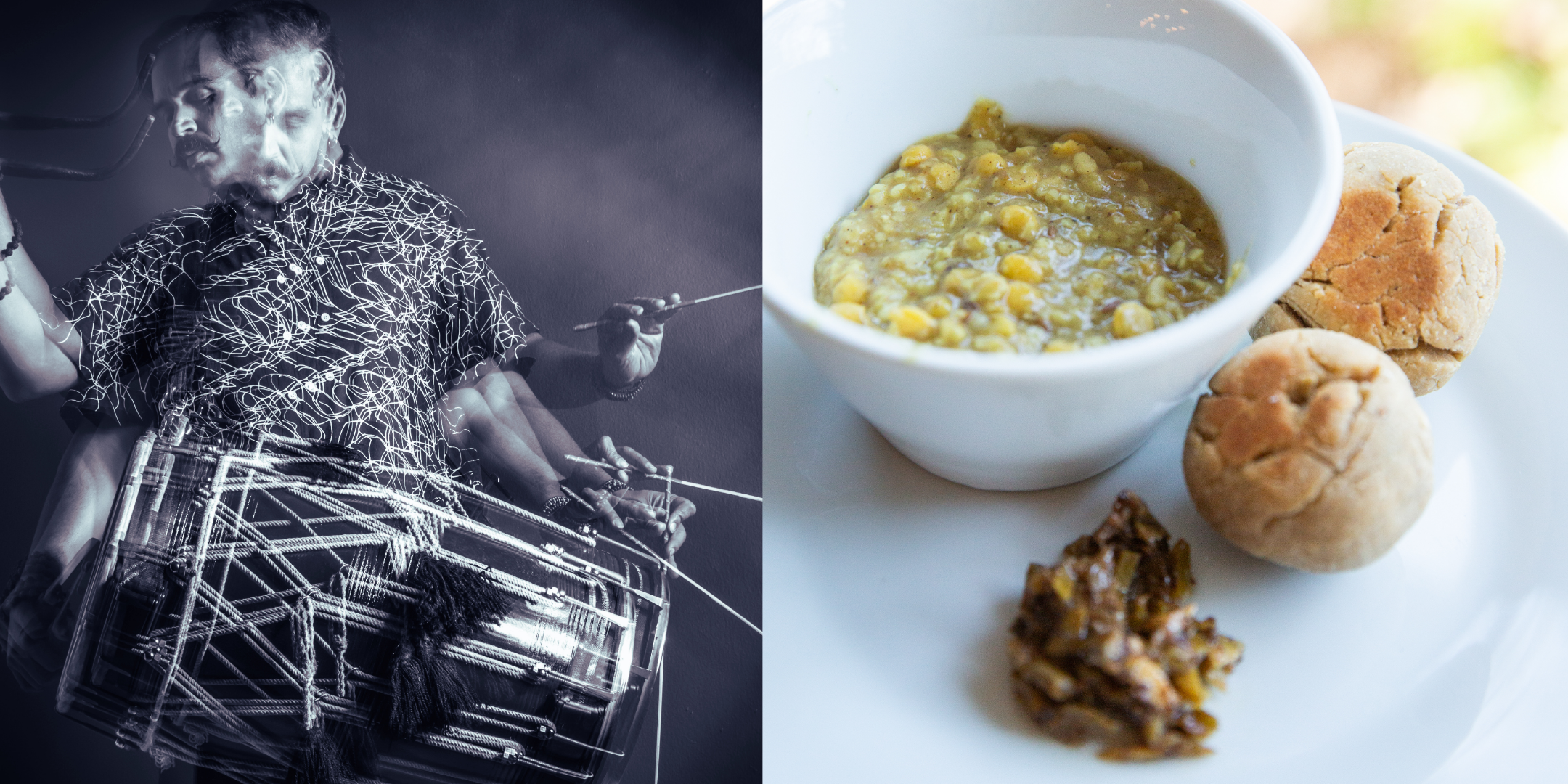
Sunny Jain // Dal Bati
Recipe
Ingredients (serves 20 people):
Dal
Urad dal — 5 cups (about 2.5 lb)
Chana dal — 1 cup (about 0.5 lb)
Salt - to taste
Cloves — 6
For tadka:
Canola oil — ¼ cup (4 tbsp)
Hing — ½ tsp
Cumin seeds — 4 tsp
Chili powder — 1 tsp
Garam masala — 4 tbsp
Turmeric — 2 tsp
Ginger - 1 large piece (about 3-4 oz), finely chopped
Bati (about 30 golf-ball size)
Atta flour — 3.5 lb (about 12 cups)
Cream of wheat — 1.25 lb (about 4 cups)
Olive oil — 1 cup
Ajwain — 2 tbsp
Salt - 2 tbs (or to taste)
Water - as needed
To serve
Mango achar - 1-2 jars (essential)
Sunny was born into a strict Jain family. His very name —“Jain”— carries that lineage. His aunt and two cousins are Jain monks in India.
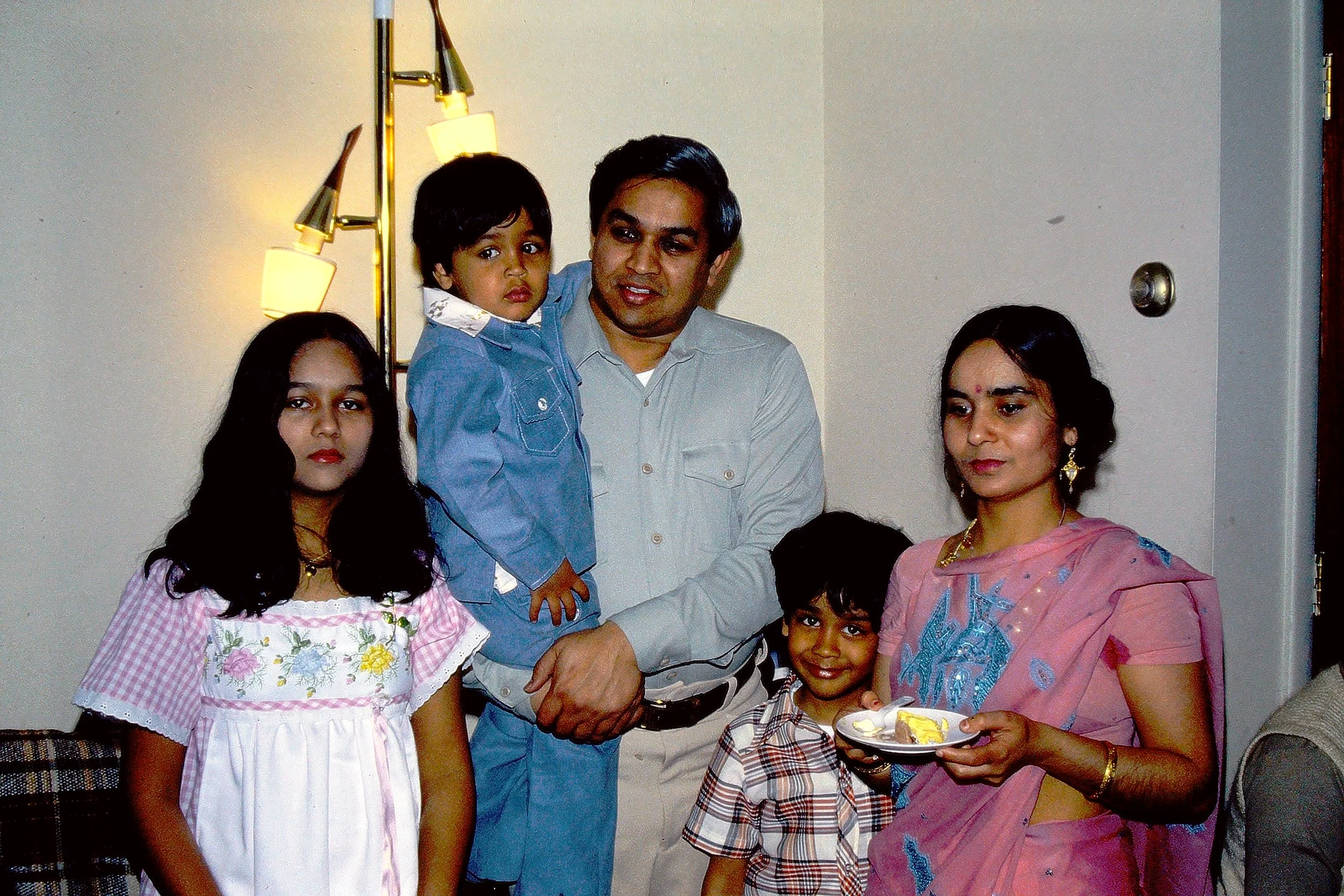
Sunny and his family.
Just two kinds of Dal (Urad and Chana), simmered in water with salt. And one important detail: with two cloves. They help reduce gas, he told me - very important. As the dal cooks, I start to wonder - is this really enough? And then, the magic happens.
In a pan, oil is heated until it almost smokes.Then come the spices - hing, cumin seeds, chili powder, turmeric, garam masala - and finely chopped ginger. They hit the oil with a sharp sizzle, blooming all at once.
And the hing - what is that smell? Something between Japanese salted rakkyo, and fresh spring onion - very strong. There’s no onion, no garlic. In Jain practive, root vegetables are often avoided - an act of care for the smallest forms of life, living quietly within the soil. And yet a deep savoriness rises unmistakably. This blazing hot tadka is poured all at once into the softened dal. In that instant, the surface erupts - bubbling violently, oil and spices crackling and bursting outward. The dal, which had been quiet, suddenly comes alive. It feels like magic. What was simple becomes layered, aromatic, complete. This is how the dal is finished - quiet, deeply nourishing.
Alongside it comes Jain-style bati. Whole wheat Atta flour is mixed with semolina, salt, and a generous amount of oil, then left to rest.A small amount of water is added gradually - not to make a soft dough, but something closer to damp sand. It is pressed together firmly, shaped into balls about the size of a golf ball - around thirty of them and baked at 350°F until golden. The outside becomes crisp, almost like a cracker. Break one open, and steam rises from within. The aroma of wheat and ajwain gently fills the air.
You dip it into the dal and eat. And you must not forget the mango achar, Sunny said. Its tangy, slight bitterness, and rich oil bring rhythm to the soft dal. Like Indian music, the flavors are complex, layered, and somehow ascetic. It tastes like the earth itself. When Fay Victor tasted it, she said, “This feels like eating roti from Trinidad -just in a bowl.” This, too, is diaspora on a plate.
Sunny approaches music with the same discipline. Raised within Jain tradition, there is a strict structure at its core. But he has broken through that shell. What he built through long training, he has opened - transforming it into music that is vibrant, groovy, kind and full of color. When you hear him play, everyone begins to smile. Bodies start to move. Like bati - only when you break through that hard, fragrant crust does the warmth rise from within.
Stay gentle.
-Yurie Ito
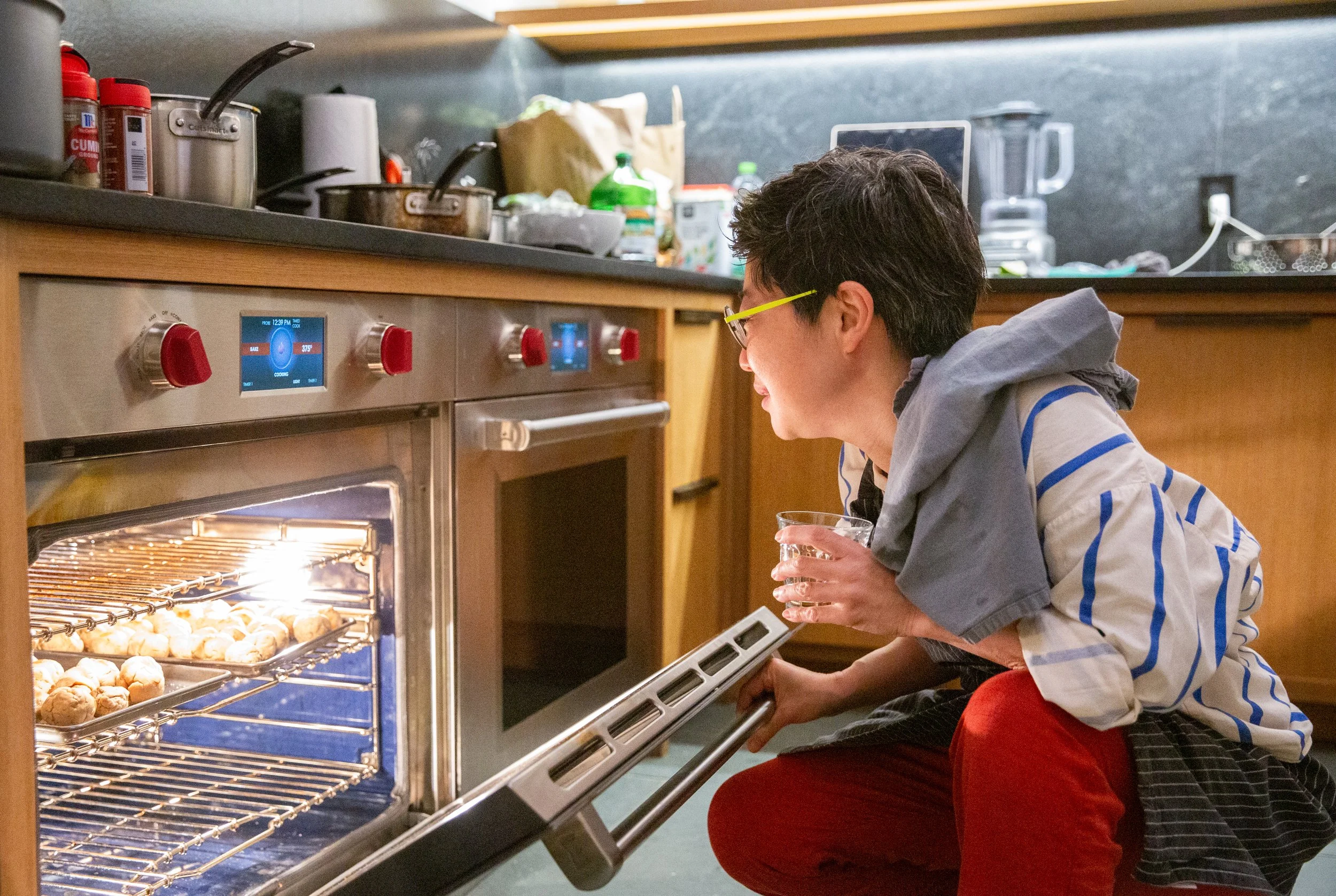
Checking on the baatis.
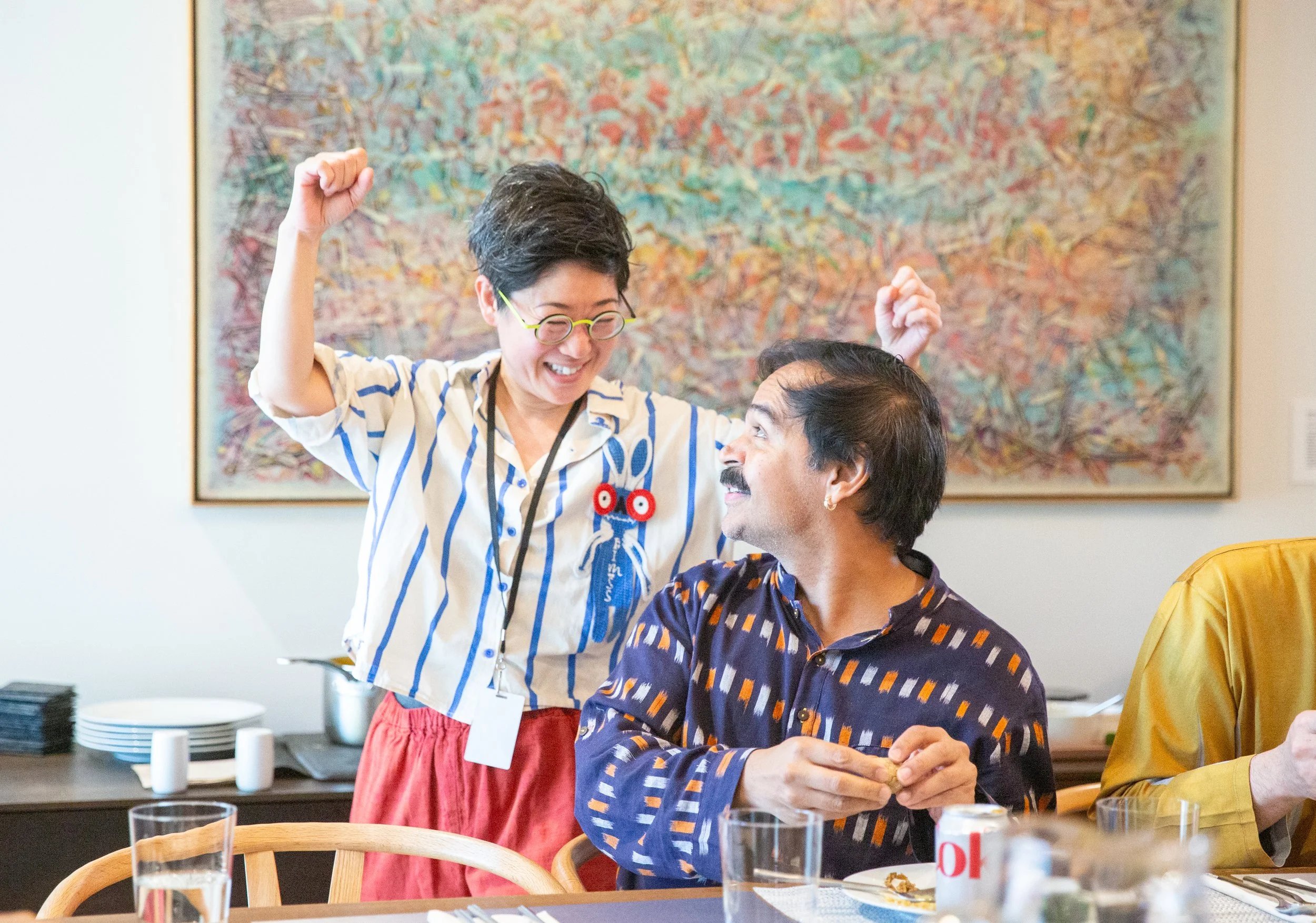
The moment I found out Sunny had signed off on the meal.
