
Inspired by Dibi - The Dish Kweku Sumbry Fell In Love with in Guinea
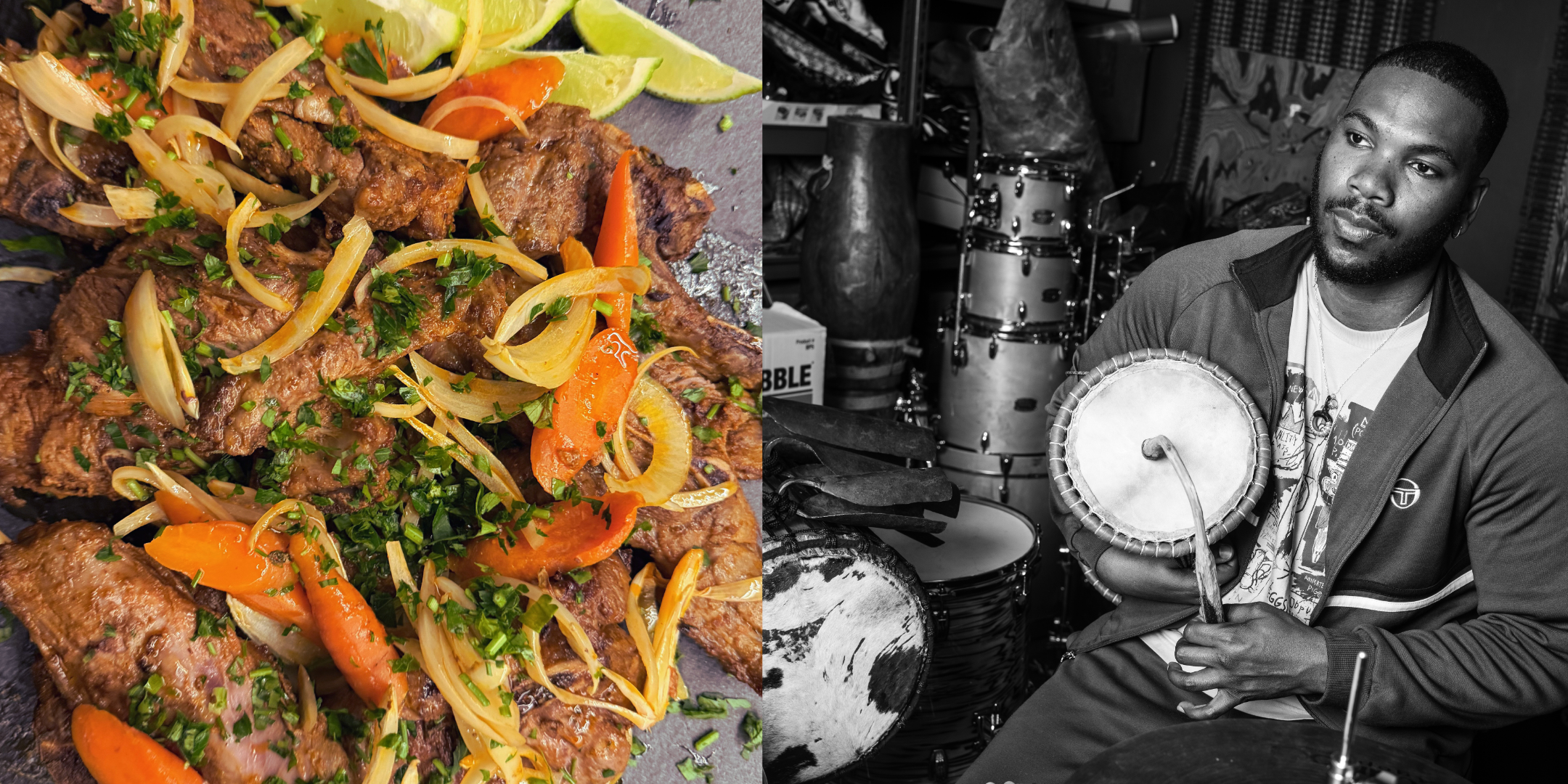
Kweku’s Grilled Lamb + Kweku Sumbry
Recipe
Ingredients (serves 20 people):
Lamb shoulder chops — 10–11 lb
Olive oil — 1 cup
Dijon mustard — ½ cup
Garlic — 8 cloves
Fresh thyme — 2 bunches
Paprika — 2 tbsp
Smoked paprika — 1 tbsp
Salt
Black pepper
Lemon — 4
Kweku first encountered lamb dibi at the age of nine, during a family trip to Guinea. Grilled over red-hot charcoal, it was simple, smoky, and deeply flavorful. In that moment, something shifted - this was the beginning of his love for West African cuisine.
But the experience was not only about food. His djembe teacher in Guinea, Mamady Keïta, was uncompromising - even with a nine-year-old. One day, after Kweku missed a single practice, his teacher said: “If you want to learn, come every day. If you come, come every day.If you cannot, then stop completely.” There was no middle ground - only zero or one hundred.
So Kweku walked. Alone. Through unfamiliar streets, making his way to his teacher.cThe other children looked like they could be his tribe, but it didn’t take long for him to understand - he was not one of them. He didn’t speak the language. He did not belong. The walk was frightening. And yet, he carried his father’s words with him: Fear does not truly exist. It lives only in your mind. So he kept walking.
As a child, he had been taught not to interrupt adult conversations. Like a spectator watching a tennis match, he followed the exchange of words with his eyes - holding back a rising curiosity, chasing after the rhythm of adult voices with quiet intensity. That rhythm, he absorbed into his body.
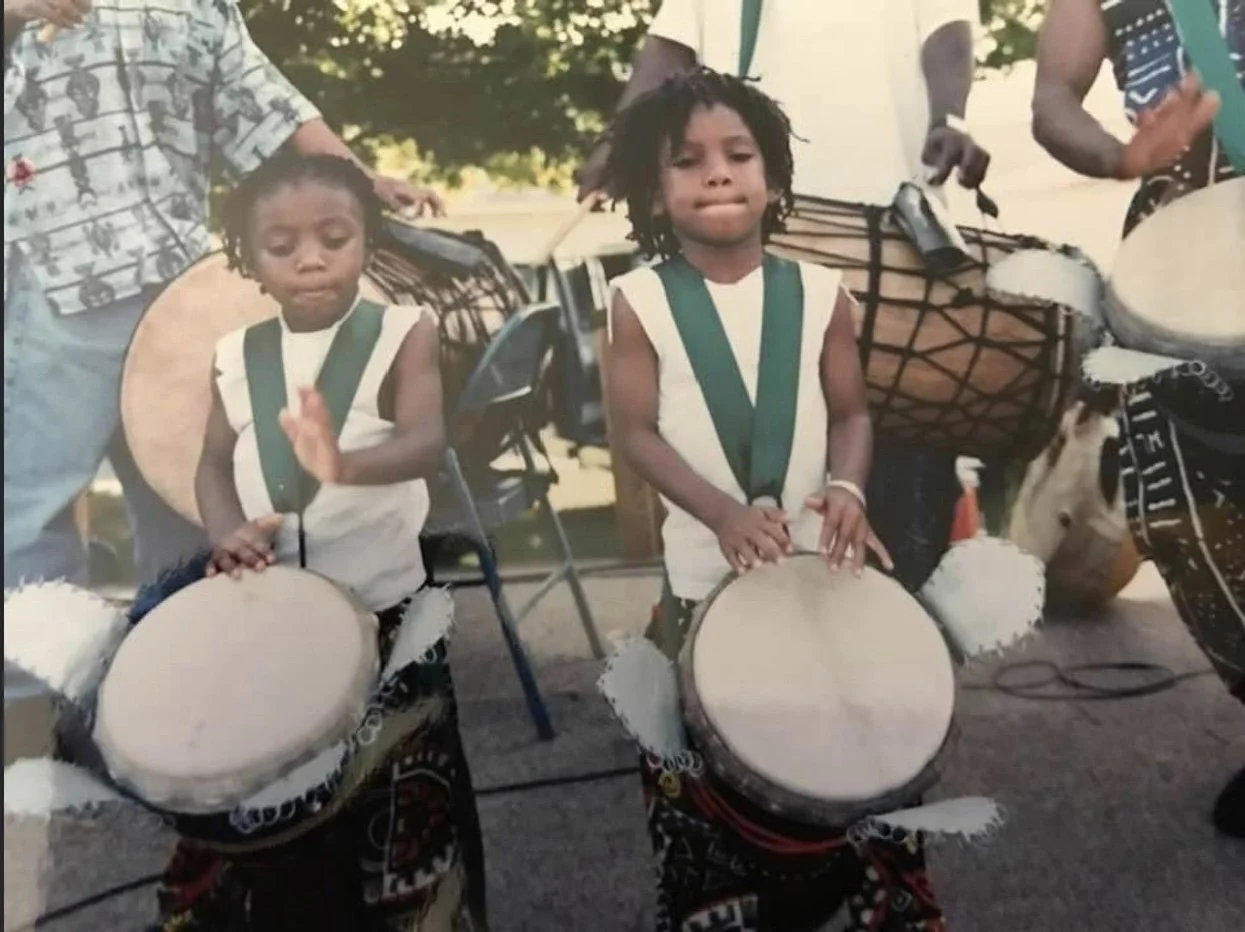
Kweku Sumbry as a kid.
And always, there was food. Lamb, marinated in Dijon mustard, paprika, garlic, thyme, and lemon juice, arrived from the charcoal grill - still warm with the memory of fire. For a boy raised in Washington, DC, this was his first encounter with African food culture. A space where fear, curiosity, and wonder coexisted. And somewhere within that complexity - he fell in love.
Tonight, at the Bloodlines Kitchen dinner, that memory of lamb is paired with Senegalese jollof rice. Its roots trace back to thieboudienne, a traditional dish where fish and rice are cooked together - where the depth of seafood broth seeps into every grain, creating a rich and layered flavor. From this lineage, jollof rice emerged - simpler, yet bold. Cooked with tomato, paprika, and chili, it carries a directness, a warmth, a sense of shared memory across the region.
Now a world-class percussionist, Kweku Sumbry approaches food with the same discipline he brings to rhythm. He limits rice, choosing instead cassava and sweet potatoes as his primary sources of carbohydrates.
One wonders - does he cook these dishes for his daughter? She is eight.“Baba, Baba, Baba,” she calls, clinging to him - and as he tells the story, his round, bright eyes soften. On the weeks he is with her, he tucks her into bed, waits for the house to fall completely still - and then, late into the night, he practices. For two, sometimes three hours, slowly, patiently, building a quiet groove. He says this is the most important practice of all - the kind that settles into the body.
On a separate blog, I will show you how we cooked kachupa - his mother’s dish.
Tomorrow is already something to look forward to.
-Yurie Ito
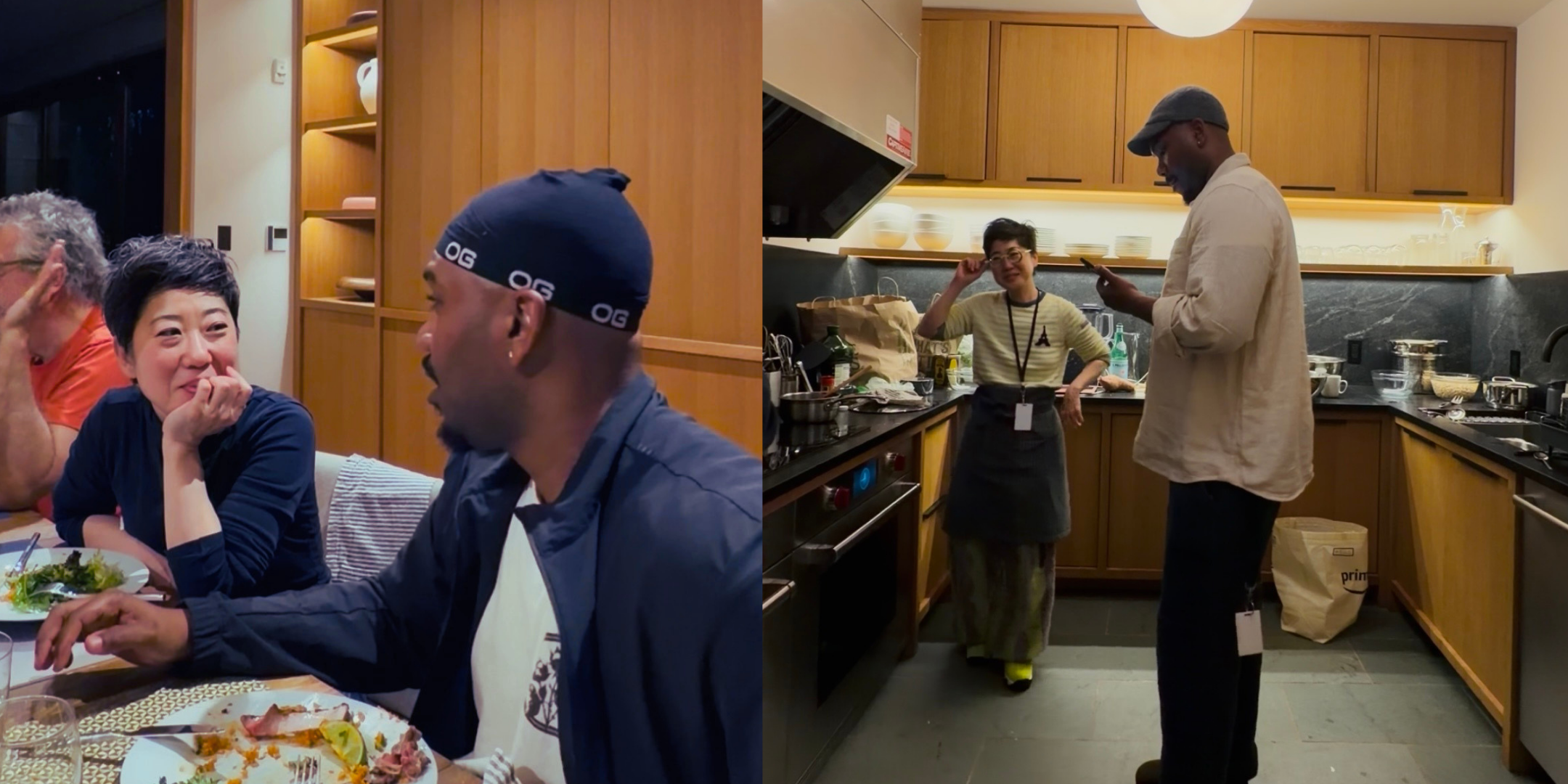
With Kweku Sumbry at the Bloodlines Kitchen in Loghaven.
